
Two out of five say: “Quality of supervision affects whether I stay in role”
Oftsed’s focus on inclusion: Over half of workforce feel well prepared but 10% report guidance unclear
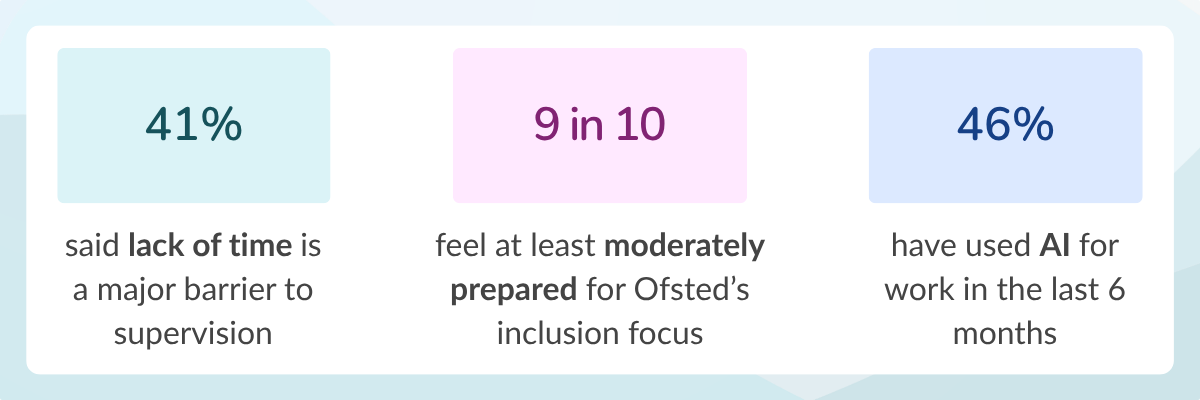
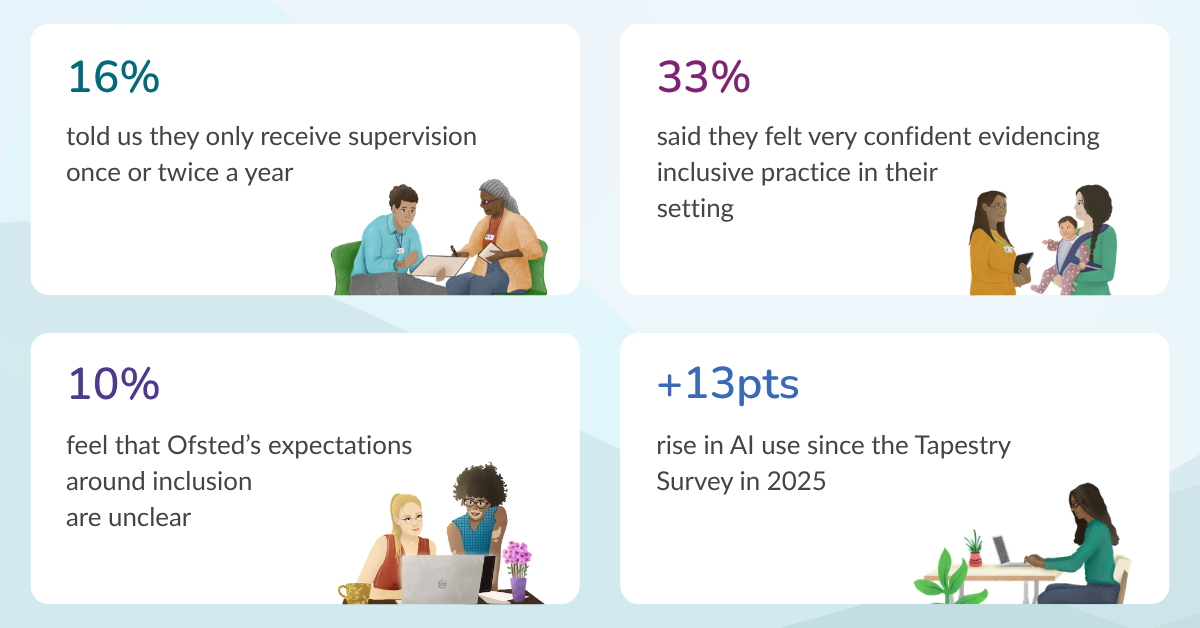
Use of AI in early years has increased by 13.5 percentage points since 2025 with 46% of respondents reporting they had used AI in the past six months compared to 33% in 2025. The annual survey by Tapestry*, the childhood education platform, asked respondents about their use of AI to help with admin and paperwork. Two thirds (66%) reported that AI saved them time with admin and paperwork and more than half (55%) reported time savings of at least one to three hours.
Respondents reported using AI for a range of administrative work and Tapestry asked respondents about 10 common tasks. Of these the most popular use of AI was drafting communications to parents and carers (58%), followed by research topics (44%) and writing policies or risk assessments (34%). Respondents added others including “writing my nativity play”, “updating the website”, and “re-writing job adverts”.
However, only a third of respondents have received guidance in how to use AI to help with admin and paperwork, and only a fifth (21%) of those using AI had received any training in AI. In particular, respondents were worried about the accuracy of AI (62%) and safeguarding and data protection (53%). More than half (55%) wanted more training to help them use AI effectively for admin and paperwork.
Ben Case said in response: “Early years educators are increasingly using AI and many report that it is helping with workload. However, their concerns about accuracy, safeguarding and data protection make sense to me. AI adoption is currently outpacing the policies necessary for its safe use, and the growing demand for training remains unmet.”
Despite the growth in the use of AI by early years educators, a quarter (27%) of respondents feel that AI should not be used in the early years and a similar number (26%) don’t trust AI to provide accurate information.
Richard Waite, Digital Pedagogy and Digital Safeguarding expert said: “People are right to be cautious about the use of AI in early years education, particularly in relation to teaching and learning. The survey suggests some educators are using AI to support administrative tasks, but this needs to be balanced with appropriate safeguards. We need settings to provide training and clear guidance, with educators’ professional judgement guiding how AI is used, alongside appropriate checks to keep information secure.”
Supervision is a factor in helping to retain early years staff
Other findings from the survey found that the majority of respondents (89%) believe supervision is “very” or “extremely” important, but 41% report that lack of time is a barrier to effective supervision, and 35% cite staff shortages as an issue. In light of these pressures, it is concerning that 46% report that the quality of supervision influences their decision to stay in a role.
Supervision endeavours to support individuals’ wellbeing, and four out of five (81%) respondents said it provided a safe space for them to talk about concerns. Encouragingly, 77% felt supervision was about much more than performance management, 79% felt it supported their professional development, and 69% said it supported their emotional wellbeing.
Dr Helen Edwards, co-founder of Tapestry and a former nursery owner, said: “Early years educators understandably value supervision so it concerns me that lack of time and staff shortages impact on its effectiveness. Access to high quality supervision supports staff professionally and, most importantly, with emotional wellbeing. The survey findings underline why supervision needs to be prioritised.”
Preparedness for Ofsted’s increased focus on inclusion
Encouragingly, well over half of respondents (57%) feel “very” or “extremely” well prepared for Ofsted’s focus on inclusion. A quarter (24%) feel “very” clear about Ofsted’s expectations about inclusion, and a third (33%) feel “very” confident that they could evidence inclusive practice if inspected tomorrow, with half (54%) feeling “fairly” confident.
However, a small but significant proportion seem less well prepared. 10% reported they were unclear about Ofsted’s expectations around inclusion and a similar number weren’t confident that their setting could provide evidence of their inclusive practice if inspected tomorrow.
Dr Helen Edwards, co-founder of Tapestry and a former nursery owner, said: “I’m aware that for most settings inclusion is constantly addressed, and it’s encouraging to see that many settings feel well prepared for Ofsted’s increased focus on inclusion. It’s important that inclusion is not treated as the sole responsibility of the Special Educational Needs Coordinator (SENCo) and is an embedded skill across all staff.”