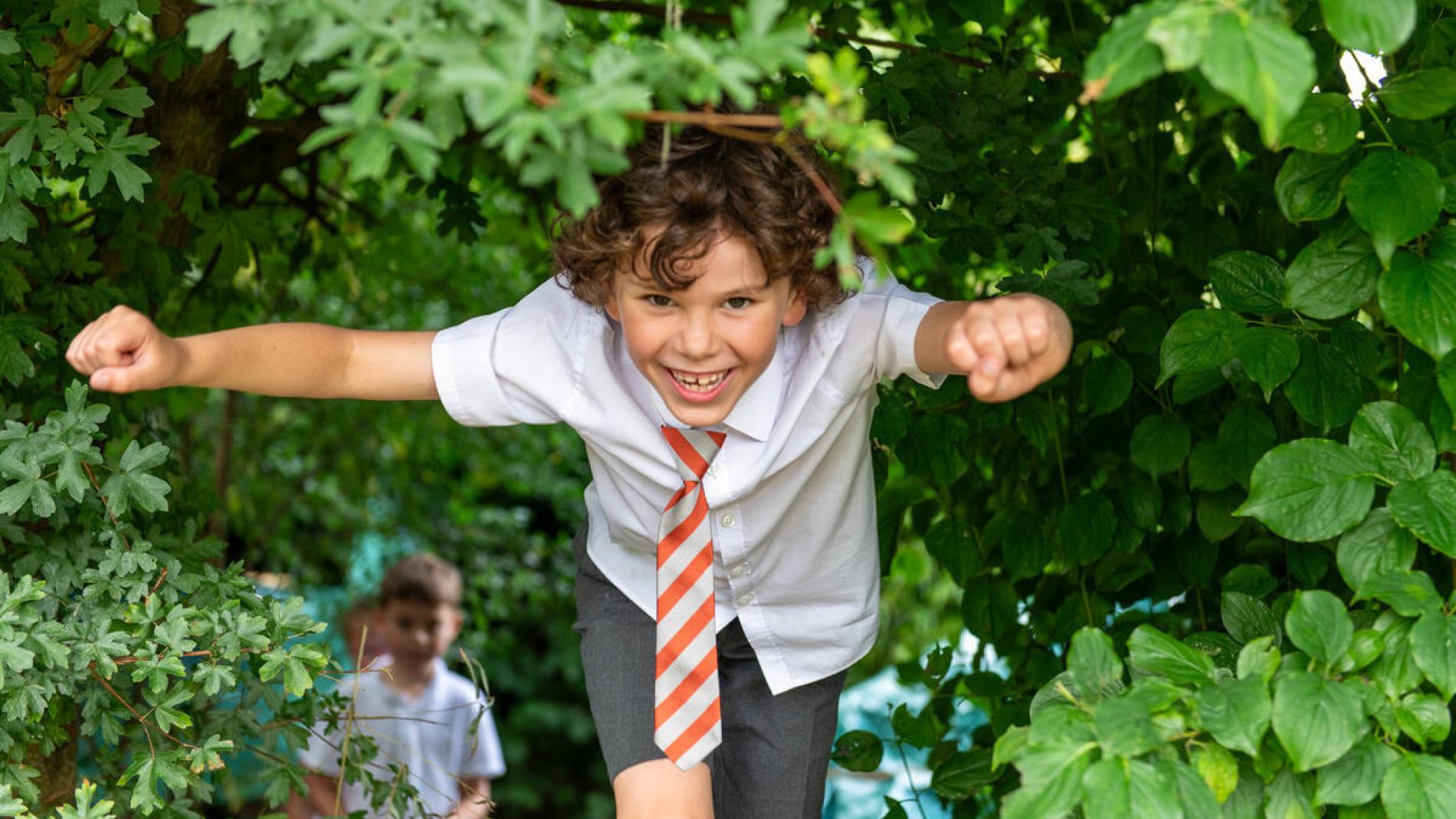
- WWF launches nationwide Happy by Nature initiative to tackle green space inequality in UK primary schools
- Wildlife presenter Steve Backshall joins WWF as new ambassador to help all children get their daily dose of nature
Nine in 10 (91%) parents with primary school-aged children (aged 11 and under) think spending time in nature should be part of the curriculum, according to new research by WWF [i], published today to launch the charity’s new primary school programme.
As millions of children return to school after the summer holidays, many face the prospect of spending their breaktimes in grey and uninspiring playgrounds.
Across the country, natural features like grass and trees have been removed from school grounds leaving them dominated by materials such as tarmac, rubber crumb and astroturf, with schools increasingly building playgrounds and fixed play equipment on artificial surfaces that absorb and retain heat in the summer, provide little shade and shelter, and are prone to flooding.
The new research findings reveal almost half (45%) of UK parents with children aged 11 or under don’t think their child spends enough time outdoors, despite almost nine in 10 (88%) believing that spending time in nature is a very important part of growing up. An overwhelming majority have noticed the positive impact of spending time in nature:
- Almost nine in 10 (88%) say spending time in nature improves their child’s physical health.
- 86% say it has a positive impact on general mood and wellbeing.
- 80% say it improves behaviour.
- Over three-quarters (77%) say it improves concentration.
- Just under three-quarters (72%) say it has a positive impact on academic performance.
Many parents want to see change, with green spaces such as gardens, trees and playing fields topping the list of facilities they want to see improved at their primary school. WWF’s research shows almost half of parents (46%) would prioritise the improvement of green spaces in their child’s school, while over a third (36%) would prioritise sports facilities and one in five (20%) would prioritise arts facilities such as music rooms or drama studios.
However, despite the clear benefits of spending time in nature, 70% of primary schools don’t offer daily opportunities for their children to connect with the natural world [ii] – and the gap is even wider in low-income communities, where just 18% of students have daily access to nature, compared to 52% in more affluent schools [ii].
That’s why WWF is launching Happy by Nature – as part of its flagship Prescription for Nature campaign – to help children connect with nature every day, starting with those who need it most. Aiming to reach one million children by 2028, the charity’s mission is to help schools across the country turn grey playgrounds into better spaces to experience nature and embed it into everyday learning and play, ultimately giving every child the chance to have a daily dose of nature.
Through its programme, WWF is supporting schools with:
- Funding & expertise: £100,000 fund for 10 pilot schools to green their outdoor spaces.
- Free toolkits: Practical guidance for all schools to improve nature-based play and learning.
- A new learning platform: Inspiring primary school pupils to explore and protect the natural world, including a live lesson programme featuring wildlife presenters live on location.
- Removing barriers: Partnering with organisations to provide outdoor gear so no child misses out.
Steve Backshall – wildlife presenter, father of three young children and WWF’s new ambassador – is supporting Happy by Nature:
“I’m really proud to be supporting WWF’s Happy by Nature initiative. Nature has always been a lifeline for me – from my earliest memories right through to now, as a dad watching my own kids light up when they’re outdoors.
“But far too many children are missing out on those magical moments in nature. By making time outdoors a regular part of the school day, we can open up a world of discovery, learning and joy – and help raise a generation that’s not only healthier and happier, but more connected to the world around them.”
Tanya Steele, CEO at WWF, said:
“Our research shows that spending lots of time in nature can be life-changing for children – lifting their mood, improving behaviour and concentration. Not every school has a woodland on its doorstep, but with a little imagination even a bare playground can become a place where wildlife and children flourish together.
“As another school year swings into action, we’re determined to give every child the opportunity to experience a daily dose of nature – just 20 minutes a day can make all the difference to their wellbeing and future.”
WWF is urging schools and teachers to help pupils get their daily dose of nature at school by exploring the charity’s Happy by Nature Hub [iii] and signing up for free resources designed to support nature-rich learning environments and outdoor experiences.