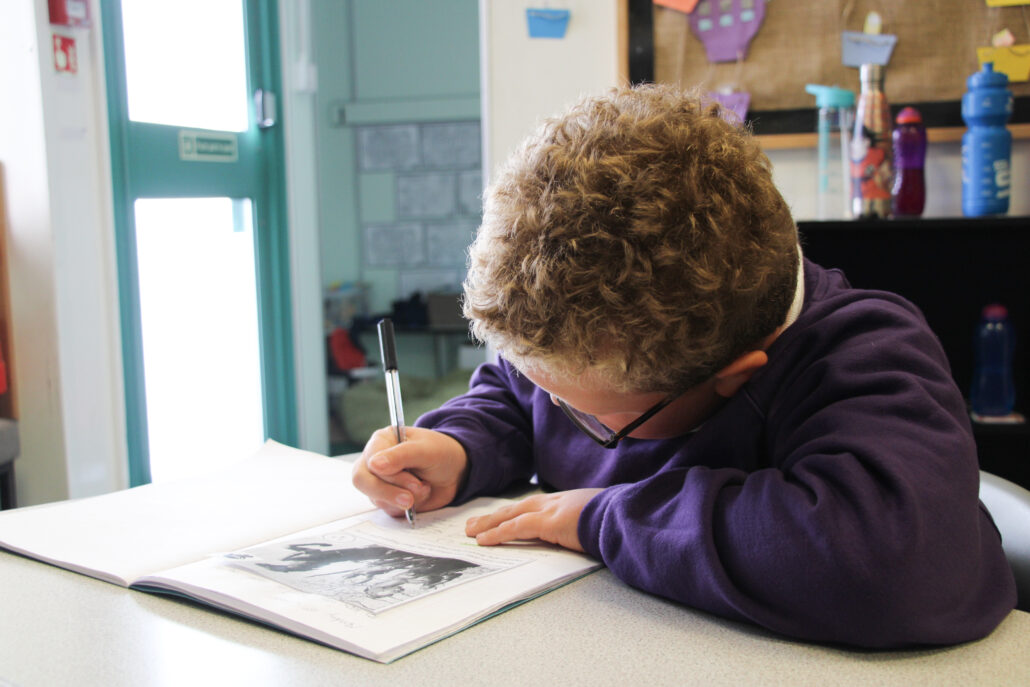
Abbey Trust, a family of eight schools across Leeds and Calderdale, has launched a new research project giving white British working-class boys a direct say in how their schools can better support them to learn and succeed.
The project, which began at the start of the academic year is now under way across all eight of the trust’s schools, including Bishop Young CofE Academy and Manston St James CofE Primary Academy. It involves 130 boys from KS2 through to KS5.
White British working-class boys remain among the lowest-attaining pupil groups nationally. Although the gap has narrowed in recent years, this summer’s GCSE results showed girls continuing to outperform boys. Some 24.4% of girls’ entries achieved a grade 7 or above, compared with 19.6% of boys’ entries, a gap of 4.8 percentage points. At grade 4 and above, the gap was 5.8 percentage points. In Yorkshire and the Humber, the gap opens early, with disadvantaged pupils starting school around five months behind their peers.
Abbey Trust sees these patterns reflected in its own schools. White British boys eligible for Pupil Premium have an absence rate around 1.7 times higher than the trust-wide rate, and are 2.6 times more likely to receive a suspension than the cohort average.
The research is built around a series of pupil-led discussions using a ‘goldfish bowl’ model. The boys sit at the centre of the conversation and talk openly with their peers about what helps them learn and what causes them to switch off, while school leaders listen and observe. Participants are also asked for their own ideas on how school could work better for them.
The boys themselves will identify the key themes from these discussions, which will then feed directly into decisions made by leaders. The aim is to go beyond simply hearing pupil voice and give boys real agency, showing them that what they say leads to action.
The research phase runs until spring 2027, with evidence-led changes trialled in schools during the summer term, and will help shape the trust’s curriculum for 2027/28. The trust expects the findings to inform areas including teaching practice, classroom relationships, leadership decisions and future academy improvement plans, and has committed to sharing what it learns with other schools across the sector.
The project builds on Abbey Trust’s long-standing focus on oracy, the skills of speaking and listening, which saw the trust launch the Yorkshire Oracy Hub, a regional network for schools, earlier this year.
Mel Carlin, Strategic Lead for School Improvement and Oracy Lead at Abbey Multi Academy Trust, said:
“Conversations about white British working-class boys too often happen about them rather than with them. This project gives these students the space to talk honestly with each other about school, while our leaders sit back and listen. They’re telling us what helps them learn and what gets in the way, and they’re choosing which themes matter most. We want every student taking part to see their ideas turn into real changes in his classroom.”
Helen Pratten, Chief Executive Officer at Abbey Multi Academy Trust, said:
“We want every child in our schools to feel that their voice counts and that school is a place where they can belong and thrive. What these students tell us will help shape decisions right across the Trust, from our curriculum to how we plan the future of each of our schools. One project cannot solve a complex national issue on its own, but by listening closely, testing what works and sharing it, we can make a real difference for our pupils and help other schools do the same.”