A new survey highlights digital transformation is a key priority for small businesses in 2026, but the majority fear the risks of implementing those changes and want additional government support to help.
New research by Be Certified, a digital ISO certification consultancy platform, reveals that over half of SMEs (55%) see digitalising their processes as a key growth priority for 2026. Despite this, 93% expressed concerns about implementing these changes.
The SME Digitalisation Report surveyed 700 UK SME owners across sectors including retail, IT, and education, exploring how small and medium-sized businesses plan to advance their digitalisation over the next year and the main challenges they face.
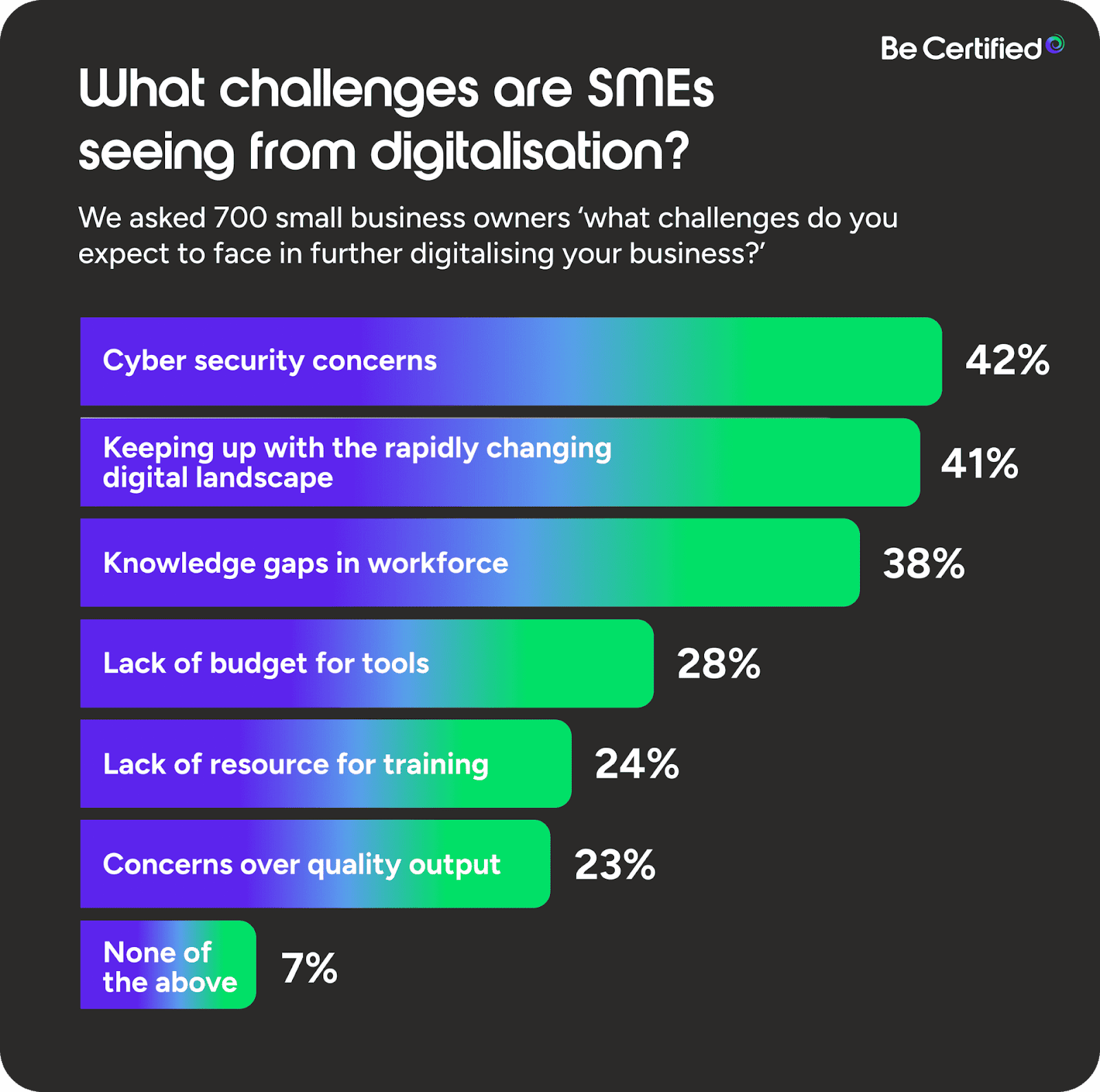
With the National Cyber Security Centre (NCSC) reporting a 50% rise in ‘highly significant’ cyber attack incidents in the past year, alongside the recent high-profile attacks on Jaguar Land Rover and Marks & Spencer, it is not surprising that two-fifths (42%) of respondents cited cybersecurity as their most pressing concern when adopting more digital processes.

A further 41% stated that they struggle to keep up with the rapidly changing digital landscape, while 38% identified significant knowledge gaps within their workforce. SMEs also highlighted budget constraints and insufficient training as barriers to digital progress. Nearly a third (28%) said limited budgets for digital tools are holding them back, and 24% reported lacking the resources to provide adequate workforce training.
To reduce the financial burden of digitalisation, SMEs are seeking government support, particularly through grants, subsidies, tax incentives, and other funding mechanisms. Grants or subsidies for purchasing digital platforms and software, as well as subsidised training programmes, were the most requested (18% each). Tax incentives for investing in digital tools followed at 17%, with financial support for hiring staff (15%) and low-interest financing schemes (14%) also considered important.
Agnes Sopel, Lead Auditor and ISO consultant at Be Certified, said: “Cyber security remains the largest barrier for SMEs in digitalising their operations. As cyber-attacks grow in frequency and sophistication, businesses must ensure they adopt the right security tools to protect their data and processes. For SMEs, it’s essential to implement multi-layered security measures in addition to employee training. A cybersecurity framework like ISO 27001 can also help SMEs formalise their security strategy and ensure that their data and systems are protected against emerging threats.“