
Britain risks raising a generation of AI and tech consumers rather than creators unless young people are given opportunities to understand, question and create with artificial intelligence from an early age, according to the Micro:bit Educational Foundation.
The not-for-profit warns the next digital divide will not just be defined by access to technology but by understanding – separating those who understand how AI works from those who simply consume it.
The warning comes as new research from Oxford University¹ found just 15% of students feel they have received enough guidance on artificial intelligence, leaving 85% struggling to understand how to use AI, the ethical questions it raises, its limitations and how it can be used responsibly to solve real-world problems.
To support this, the Foundation has launched CreateAI, a web-based tool that allows pupils to explore artificial intelligence through movement and machine learning.
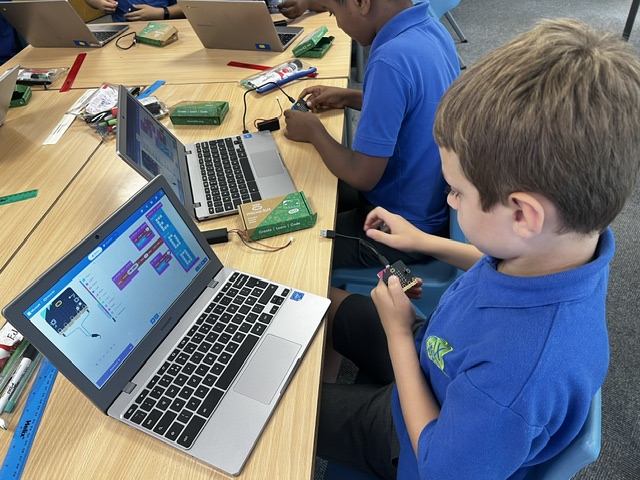
Available globally for free, CreateAI lets pupils train machine-learning models through physical actions like waving or clapping before running them on a BBC micro:bit. By building these hands-on projects, such as wearable technology that helps children manage emotions, young people see exactly how AI learns, responds, and makes decisions, showing what is possible when they move from simply using technology to understanding how it works.
The Foundation’s approach is already being used in classrooms to help children develop these skills. At St Joseph’s RC Primary School in London, Computing Lead Kasia Suliga Wasielewska has seen first-hand how introducing coding and AI concepts early can change the way pupils think, problem-solve and engage with technology.
Kasia said: “Many of our pupils interact with technology daily, but they are passively consuming it. It’s vital that we equip them with this knowledge and skillset from a young age, as it’s these foundational skills that will allow them to interrogate new tech such as AI and feel in control as technology advances, rather than feeling it controls them. By introducing physical computing early, children develop computational thinking through play. We don’t begin with coding – we begin with curiosity. As a result, we find students no longer rely on the phrase ‘it’s broken’ when a code fails, instead they analyse their errors, fix their code and test it again, a skillset that will be hugely beneficial to them throughout their life”.
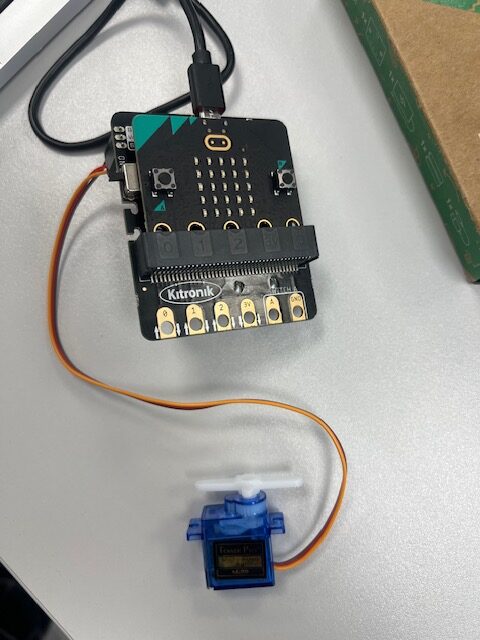
“Watching our pupils engage with the micro:bit demonstrates the untapped potential of children being able to create new and innovative ways of tackling real life problems. Our year 6 pupils worked with micro:bit and modular robots to create intelligent fans that reacted to rising temperatures and seeing the joy and passion on their faces as they ran around the playground and showed how it worked in cool and hotter areas was absolutely incredible to see. Children are able to create magic, rooted in logic, if they’re given exposure to the knowledge and tools like micro:bit and CreateAI.”
Kasia’s experience reflects the Foundation’s wider belief that children should be equipped to understand and shape technology, rather than simply consume it.
Tom Doust, Chief of Learning at The Micro:bit Educational Foundation, said: “Just as we teach children to read and think mathematically, we also need to support them to understand how technologies, like AI, are increasingly shaping their lives. This involves building knowledge and confidence to ask good questions and recognise the limitations of AI systems. The Foundation is giving students the opportunity to safely experiment with AI and machine learning, using our CreateAI platform. This hands-on and interactive approach helps to demystify AI, helping children understand, question and improve AI systems, making them better placed to shape the technologies, products and services that influence society, while those who do not, risk becoming passive users of systems they neither understand nor control.”
The Foundation is calling on educators, policymakers, and the tech industry to collaborate to make AI, data, and computing literacy a core part of school curriculums. This will ensure every young person develops the confidence to not just use AI, but to critically understand, question, and create with the technologies shaping their future.